
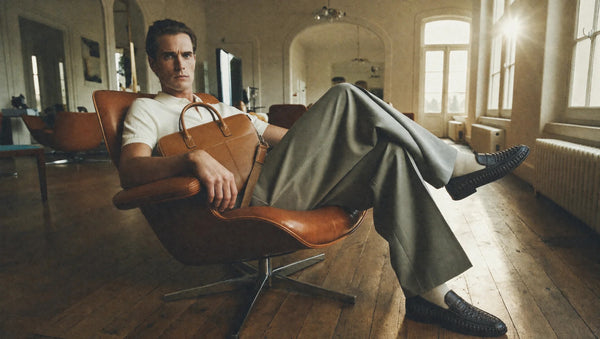


The Bag as Document: What Your Bag Reveals
Art & Culture

A bag is a document. Not in the bureaucratic sense, but in the sense of recording... keeping track of where you have been, what you have carried, what was important enough to bring along.
The wear patterns on a well-used bag are a kind of autobiography. The corner that has been scuffed by regular contact with a car door. The strap that has stretched slightly from the weight of a laptop carried for years. The interior stain from a leaking pen, or a spilled coffee, or something more mysterious.
We have always believed that bags should be made to carry these marks well. Not to resist them — that is impossible — but to absorb them in a way that adds rather than diminishes. Full-grain leather does this. The surface is not uniform to begin with; it has variations, small inconsistencies that become part of the record rather than fighting against it.
This is why we are suspicious of bags that look perfect. Perfection in a carried object is a form of dishonesty, it suggests that the object has not been used, or that it has been designed to hide use. Neither of these is what we want to make.
We want to make bags that document. That accumulate. That become, over time, specifically yours in a way that no new bag can be.